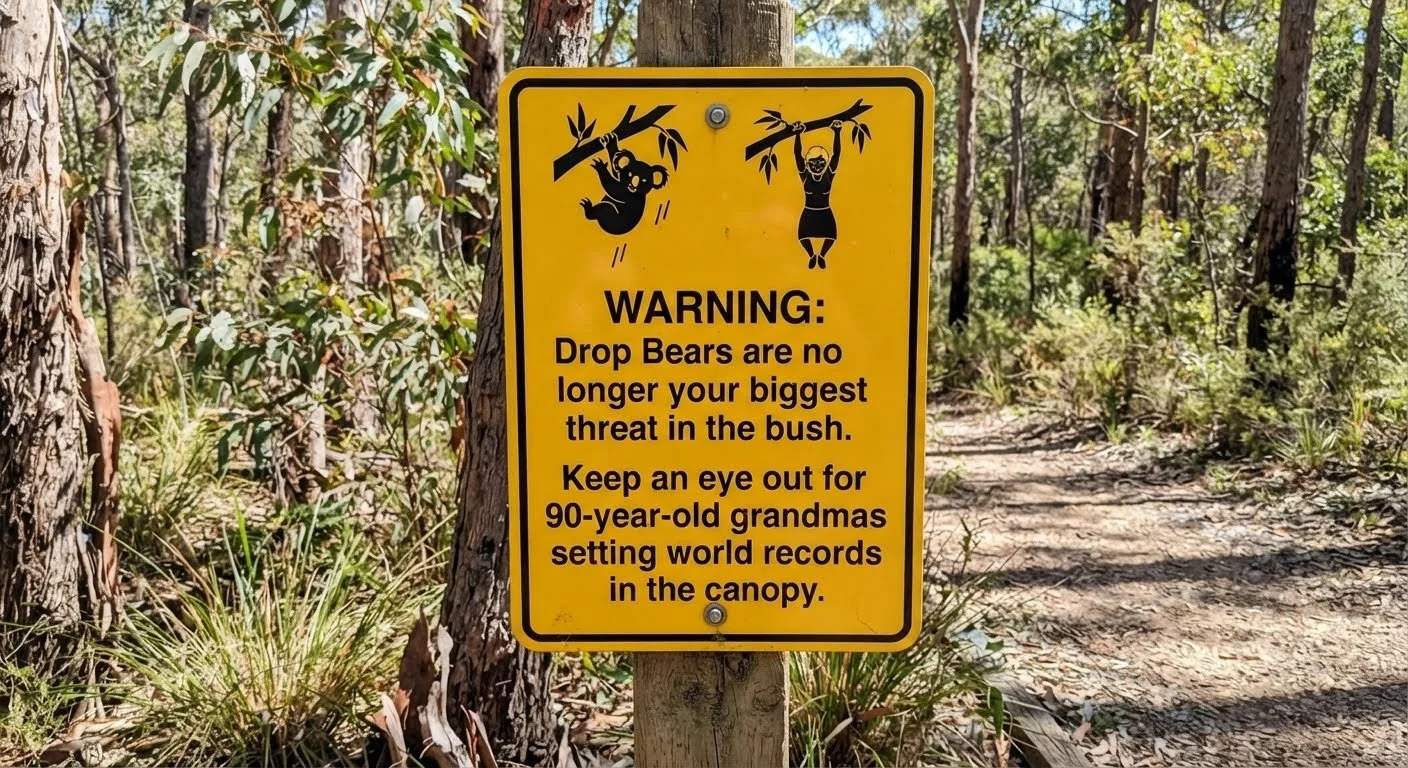
Hanging around is usually considered a bad habit. But for one extraordinary 90-year-old, it became a Guinness World Record!In March 2026, American grandmother Ann Crile Esselstyn achieved something rather remarkable.
At 90 years of age, she held herself suspended from a bar in a dead hang for an astonishing 2 minutes and 52 seconds.
Now, I don't know about you, but I'm reasonably confident my arms would have started negotiating their retirement considerably earlier!
And here's something even more extraordinary.
In September, Ann broke her own record!
At 91, she managed an incredible 3 minutes and 43 seconds.
Apparently, nobody told Ann that she was supposed to be slowing down.
So, what's her secret?
You might imagine that Ann spends hours in the gym, following some extraordinary training program.
But what interested me most about her story wasn't the dead hang itself.
It was her everyday lifestyle.
Ann has been physically active throughout her life, participating in numerous sports. She also enjoys walking, cycling, gardening and doing squats.
And this reflects something I've talked about quite a bit on Over 60s Wellness.
It doesn't matter so much what you do, as long as you keep moving!
Of course, different activities offer different benefits, and maintaining muscle strength becomes particularly important as we get older.
But physical activity doesn't always have to involve gym memberships, expensive equipment or elaborate exercise routines.
Sometimes it's simply about continuing to use the abilities we have.
What does hanging from a bar tell us about ageing?
Here's where things get particularly interesting.
Researchers have been studying the relationship between grip strength and healthy ageing for years.
Grip strength is usually measured using a handheld device called a dynamometer. It's a relatively simple test, but it can tell researchers something about a person's overall muscular strength and physical health.
A 2026 systematic review and meta-analysis published in the British Journal of Sports Medicine examined 94 cohort studies and found that stronger handgrip performance was associated with a lower risk of several long-term health conditions.
The researchers also examined another wonderfully ordinary activity: standing up from a chair five times.
Who would have thought that getting out of your chair could be so interesting to scientists?
The important distinction is that these are associations. Having a stronger grip doesn't automatically prevent illness, and a dead hang isn't the same as a clinical grip-strength test.
But the research reinforces something important: maintaining muscular strength is closely connected with physical capability as we age.
The remarkable benefits of ordinary movement
One of the things I particularly like about Ann's story is that it challenges the idea that exercise needs to be complicated.
Australia's physical activity guidelines for older adults encourage a combination of everyday movement, activities that strengthen muscles, and exercises that support balance and coordination.
And there are plenty of ways to achieve that.
Walking the dog, working in the garden, cycling, carrying shopping, climbing stairs or participating in an activity you genuinely enjoy can all contribute.
Of course, gardening isn't necessarily gentle exercise.
Anyone who's spent an afternoon shifting firewood or wrestling with an enthusiastic wheelbarrow will appreciate that!
The point isn't that every activity produces the same results. Strength, balance and aerobic fitness each deserve attention.
But staying active in ways that suit our abilities and interests is a pretty good place to start.
It's not about becoming the next Ann Esselstyn
Now, before anyone heads outside looking for a suitable branch, a word of caution.
Dead hangs place considerable demands on grip, shoulder strength and body-weight support. They're not necessarily appropriate for everyone, particularly without suitable preparation.
And we certainly don't need to break a world record to benefit from movement.
Perhaps your achievement is walking a little further than last month.
Perhaps it's feeling steadier on your feet, being able to carry your shopping more comfortably, or continuing to enjoy the garden.
Those achievements might not attract the attention of Guinness World Records.
But they can make an enormous difference to everyday life.
Ann's achievement is extraordinary. Her lifelong habit of staying active is the part of her story that I find particularly inspiring.
And if you happen to be walking through the Australian bush, keep an eye on the canopy.
Apparently, drop bears are no longer our biggest concern.
There's a 91-year-old grandma out there who's giving the entire Australian wildlife population a run for its money! 🐨🌳💪
Research and references
Guinness World Records (2026). Determined 90-year-old grandma breaks record for oldest woman to hold a dead hang.
Guinness World Records (2026). Oldest person to hold the dead hang position (female). Updated record, September 2026.
British Journal of Sports Medicine (2026). Clinical importance of simple muscular fitness tests to predict long-term health conditions: a systematic review and meta-analysis of 94 cohort studies.
https://doi.org/10.1136/bjsports-2024-109173
Australian Government Department of Health, Disability and Ageing (2026). Recommendations for older adults (65 years and over).